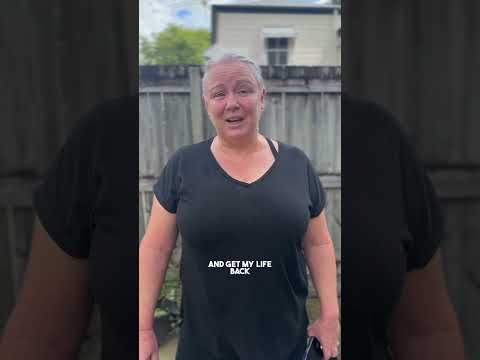
Belinda was diagnosed with a frozen shoulder, bicipital tendinitis, and had a steroid injection to manage the pain. She knew it bought her time, not a solution. If she didn’t build strength around that shoulder, she’d be back in the same position within a few years. So she decided to do something she had never done before: walk into a gym.
She had two specific criteria. She wanted somewhere small and close to home. And she wanted a female-only environment: a space where she could learn without the self-consciousness that comes with training alongside strangers. She’d never set foot in a gym. She didn’t know the lingo. She was starting from scratch. She needed a place where that was genuinely OK.
From Holding a Glass to Lifting 35kg
When Belinda started, she could barely hold a glass of water in one hand. She had to switch hands to manage it. Grip strength, shoulder stability, and basic pressing patterns were all compromised. Her first personal training session confirmed it: she had essentially no upper body strength to work with.
Then she got to work. Slowly, progressively, the weights moved upward. Within months she was lifting 35kg. The shoulder that had needed a steroid injection to function was now trained, strong, and stable. The moment she realised she could peg out washing by herself, something that had become impossible, the shift from rehabilitation to capability was complete.
Why Strength Training Reverses Shoulder Injuries Others Can’t Fix
Frozen shoulder (adhesive capsulitis and related conditions like bicipital tendinitis) is partly a structural problem, but it’s also a strength and stability problem. The rotator cuff and surrounding musculature lose capacity under chronic pain and disuse, creating a cycle where the joint is protected rather than loaded, which accelerates deterioration. Progressive resistance training, done correctly, breaks that cycle. It rebuilds the capacity of the joint rather than working around it. This is why strength training produces outcomes that years of physio and steroid injections alone often can’t. It addresses the underlying deficit, not just the symptom.
Strength That Carries Into Real Life
What Belinda gained wasn’t just a gym metric. It was functional independence. She spent two weekends moving tonnes of gravel in her yard for drainage work, something she would never have attempted before. She pegs out washing. She carries things she used to have to ask for help with. The gym number went up; her reliance on other people went down.
She noticed something else: every single time she walks through the door, the members around her are supportive. Not performatively, genuinely. She came in knowing nobody and knowing nothing. She stayed because the environment made learning feel safe rather than exposed. As she put it: “Every single time I walk through the door, every member is supportive.”
Her advice to anyone on the fence is straightforward: “Do it for yourself. Make the time for yourself and you actually feel better and you’ll find a better balance in your life too.”